
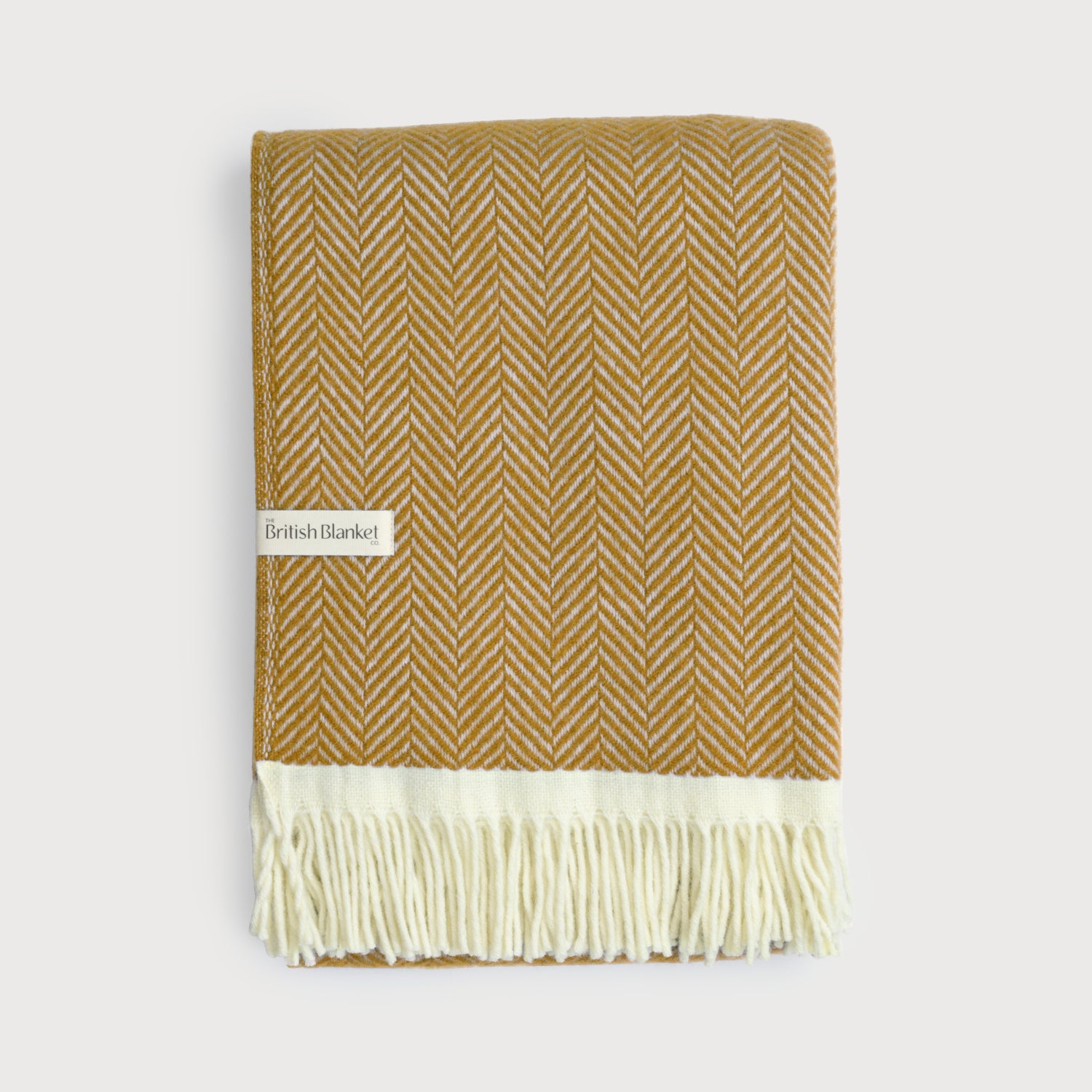
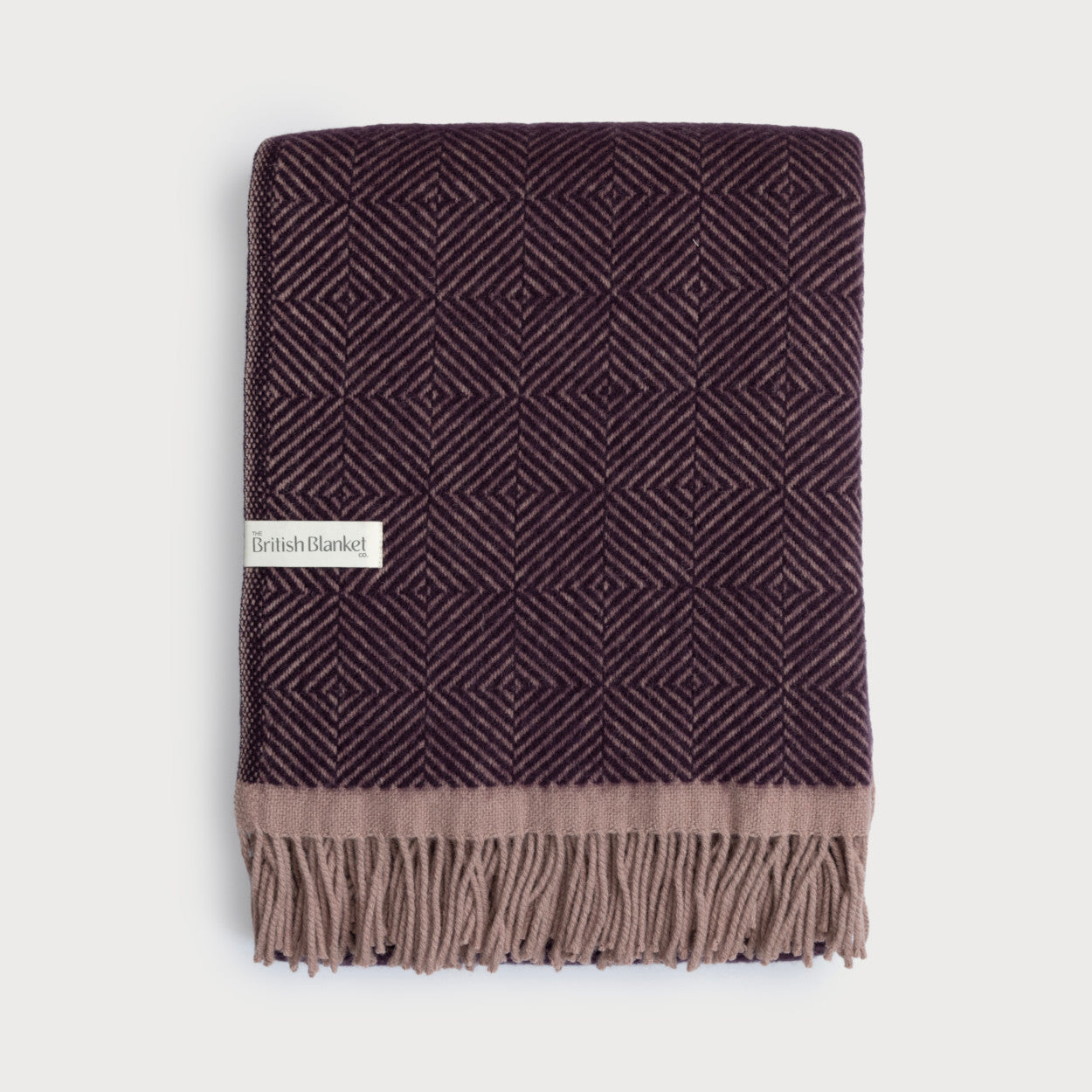
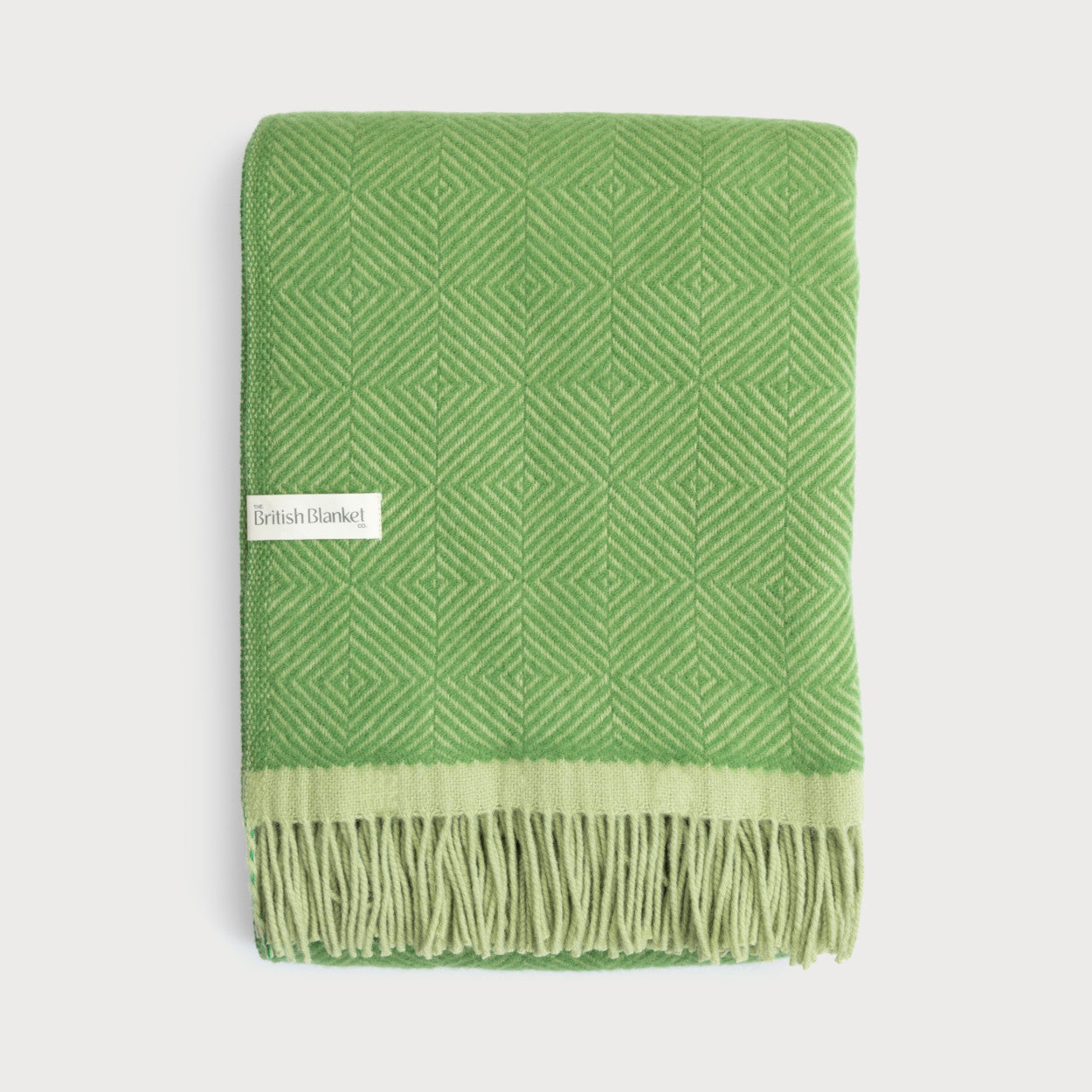
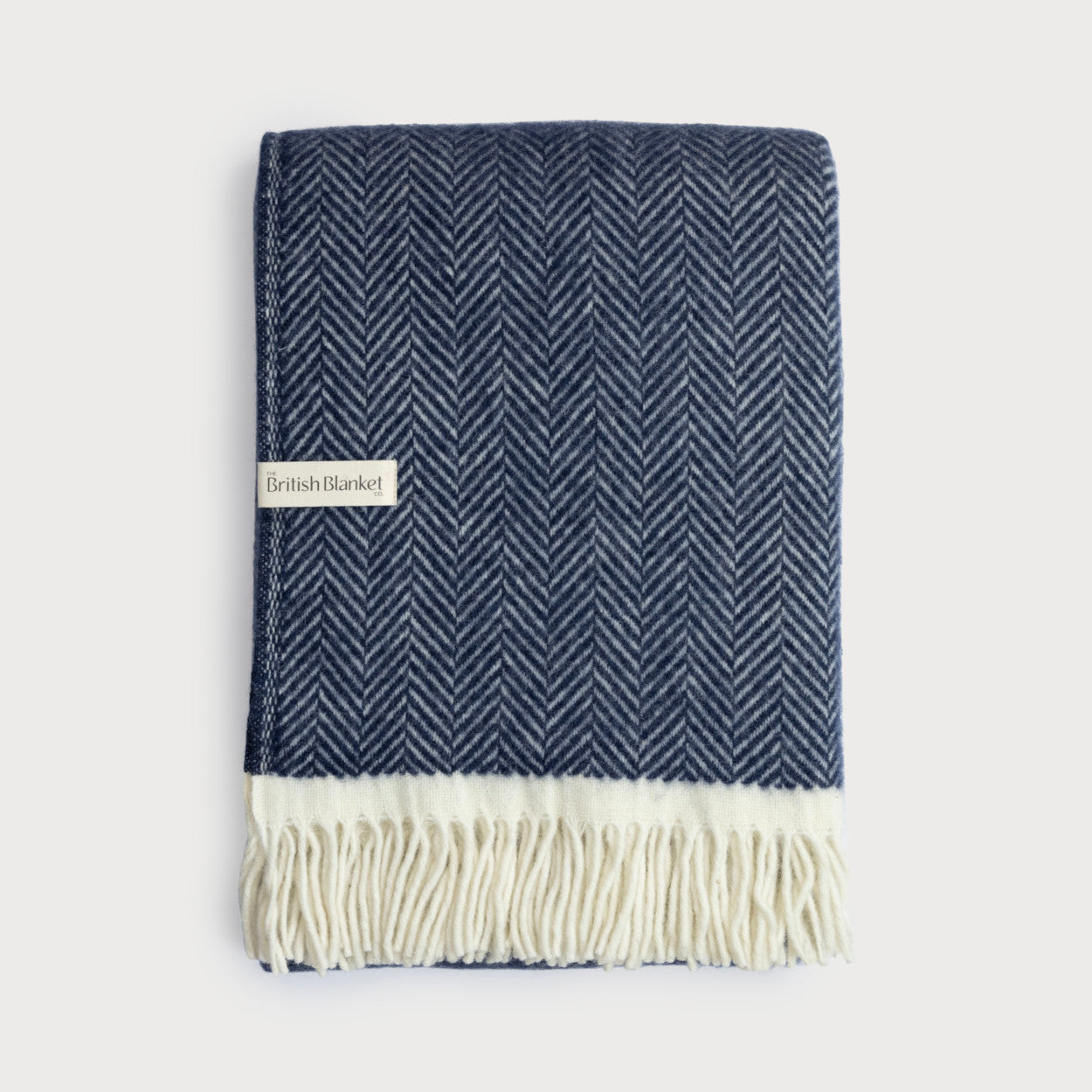
When Bethan first approached artist and printmaker Angie Lewin about creating a collection of woven blankets, the connection wasn't simply aesthetic. Both have spent years looking closely at Britain's landscapes, valuing traditional craftsmanship and believing that everyday objects deserve the same care and consideration as works of art. The result is a collection inspired by woodland walks, meadow grasses and rocky coastlines, woven in Britain and designed to be used, enjoyed and lived with for years to come.
Bethan visited Angie at her home and studio in Scotland to talk about the quiet art of observation, the craft of wood engraving and what it meant to transform a tiny hand-carved print into a blanket almost two metres wide.

Bethan and Angie in her home studio in Scotland
In conversation with artist Angie Lewin and Bethan John, co-founder of The British Blanket Company
Let's start at the beginning. What made you think Angie was the right person to collaborate with?
Bethan: I've admired Angie's work for years. I love the way she observes tiny details of nature, her eye for shapes and surprising use of colour. We often talk about blankets bringing comfort, but they also become part of people's homes for decades, so we wanted to work with someone whose work has that same timeless quality.
I felt we have many shared values in our approach, and this project never felt like we were simply applying an artwork onto a blanket. Instead we worked closely together to create something that respected both crafts equally.
Angie, when that email landed in your inbox, what appealed to you?
Angie: I really like bringing artwork into the home, into the domestic space. I think it's important not only to have art around you, but also beautiful things that you use every day.
A blanket felt like a lovely object to work with because it naturally becomes part of everyday life. I'd never worked on a full collection of blankets like this, so it was an opportunity to explore something new.

Angie and Bethan with Forest Floor in Rust and Fields Edge in Green
Your work begins outdoors. What happens before you arrive back in the studio?
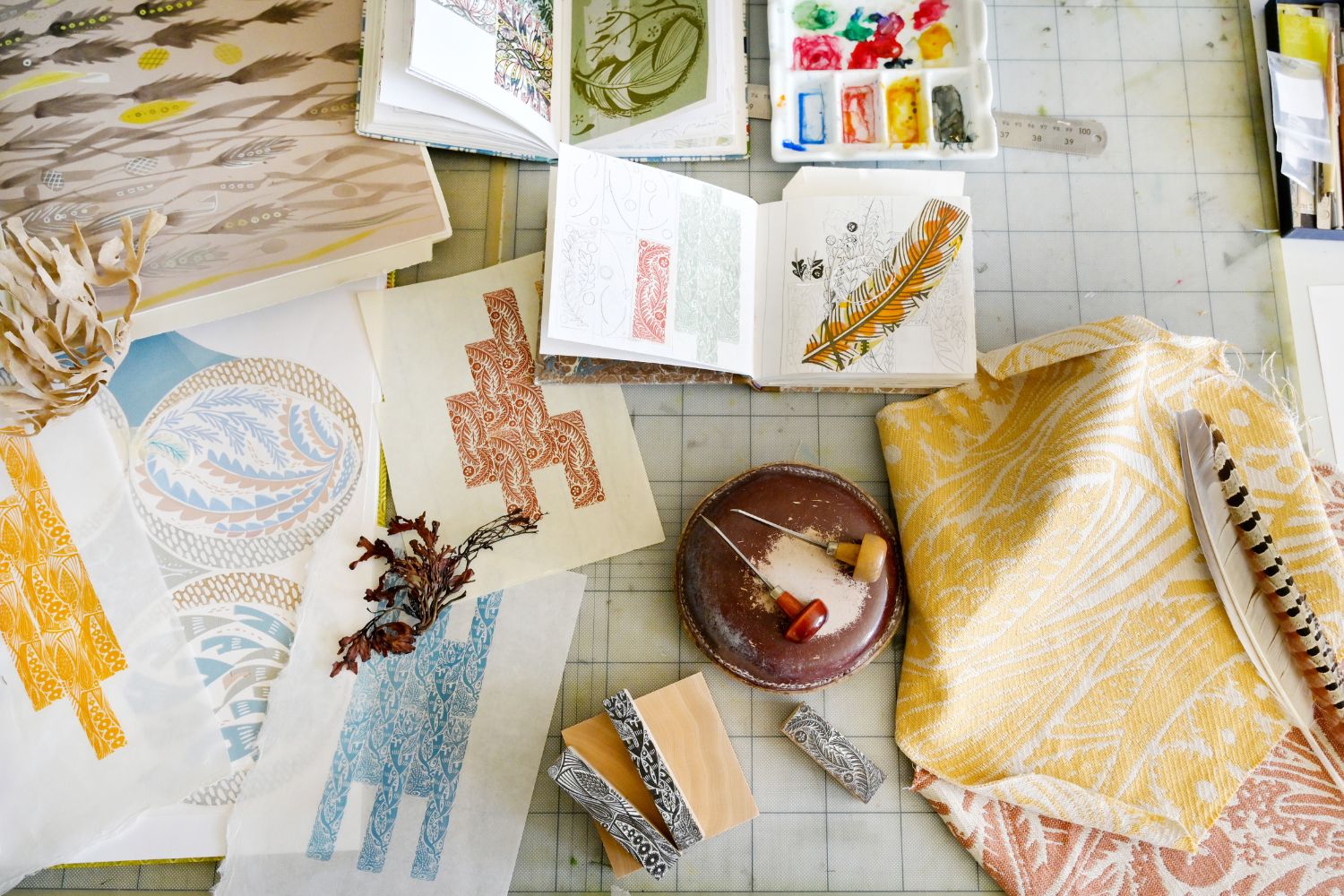
Angie: Most things begin with walking and sketching. I'll usually have a small sketchbook with me and I'll stop whenever something catches my attention.
If I'm walking a long distance I travel quite lightly, without paint, and instead annotate my graphite pencil sketches. I'll write things like "redder purple" or "unopened yellow buds".
The interesting thing is that spending ten minutes sketching fixes in your memory far more than taking a photograph. I can look back at one drawing and know exactly where I was standing because I remember the plants growing there and the weather at that moment.
You seem drawn equally to tiny details and vast landscapes.
Angie: I think most people are, really.
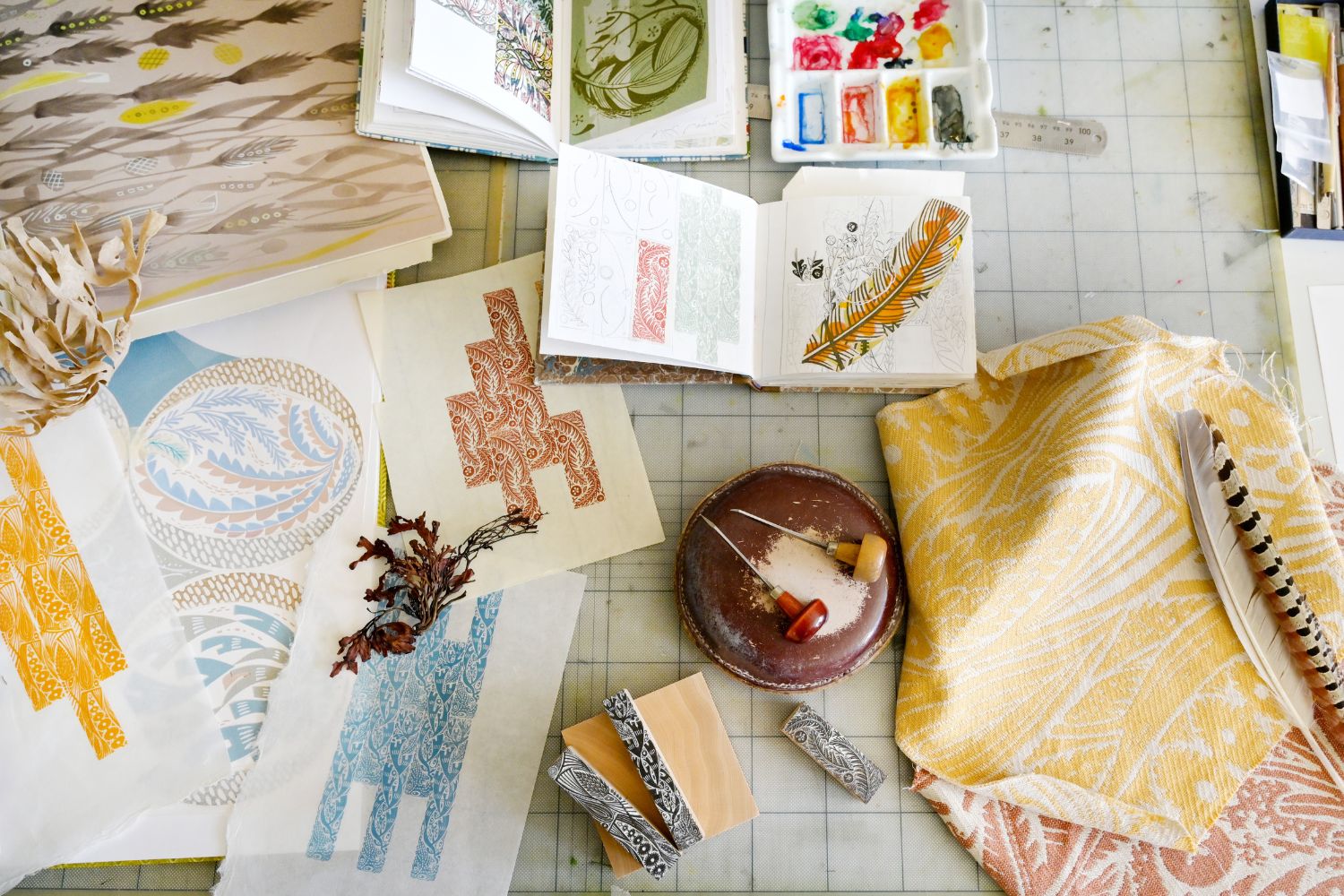
When you're walking along a beach you're aware of the bigger landscape, but you're also looking down at your feet. You'll notice a pebble with a hole through it or a beautiful piece of dried seaweed or a shell that has an extraordinary shape. I bring those things back to the studio. Sometimes they remain quite recognisable and sometimes they're transformed into something much more stylised, but they always begin with real observation.

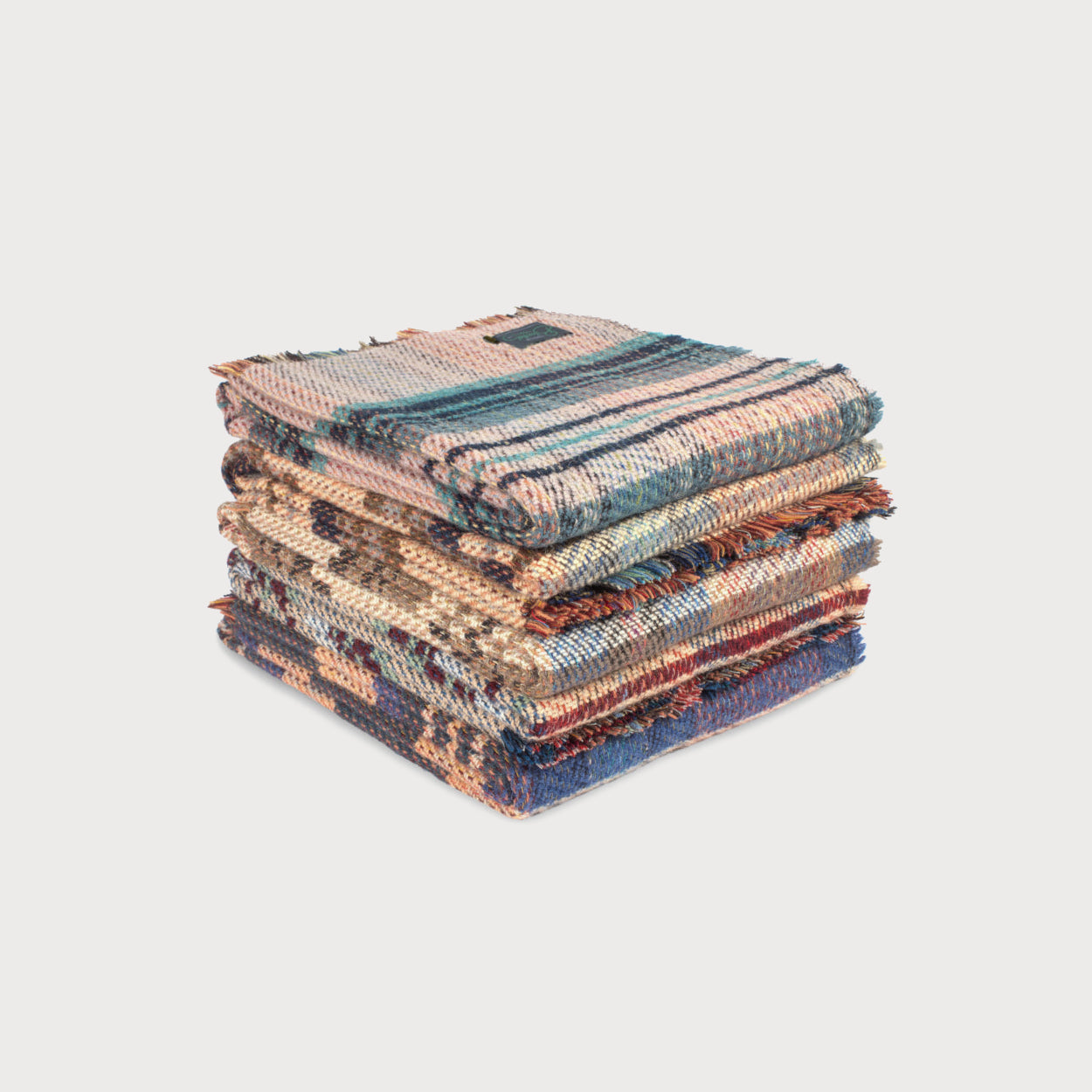
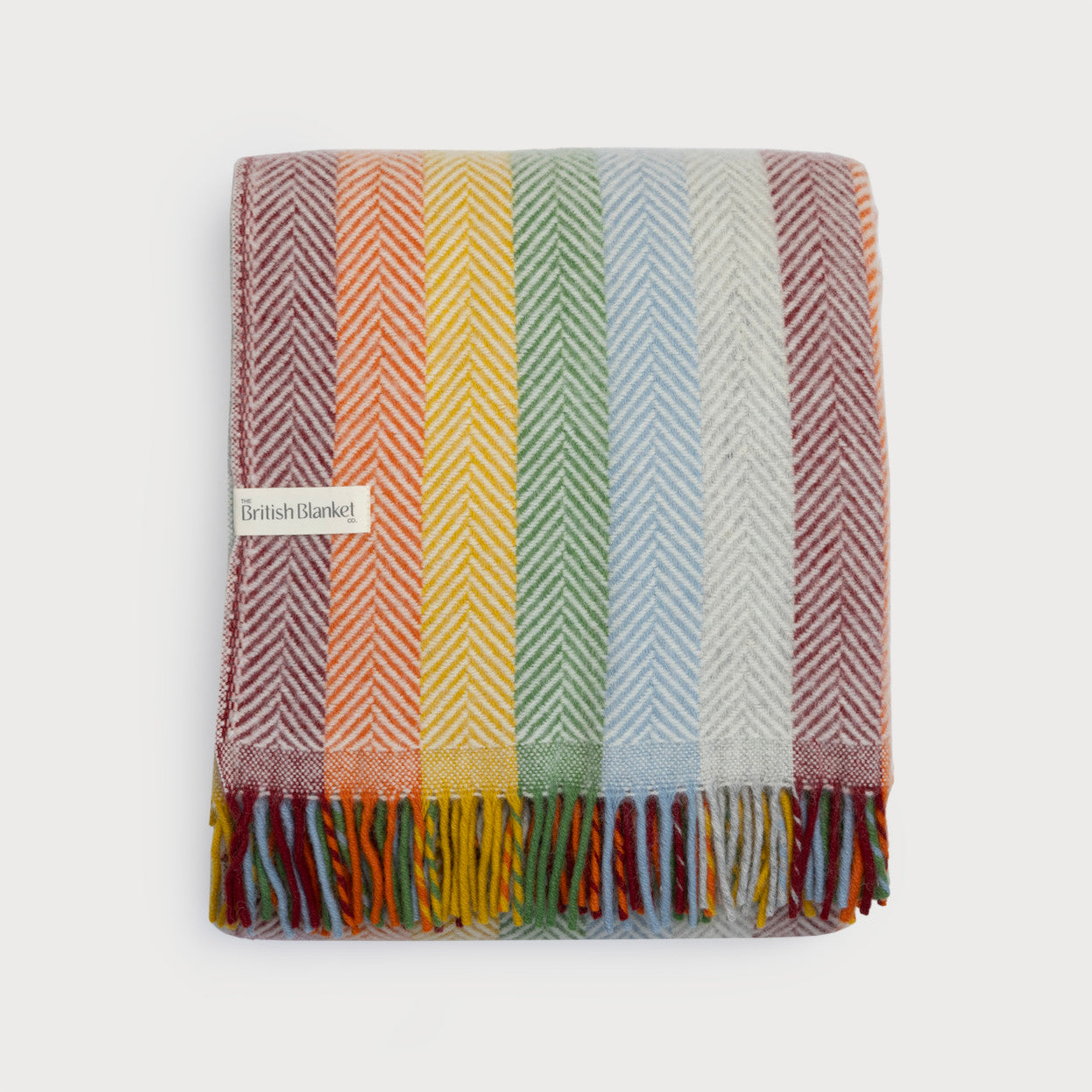
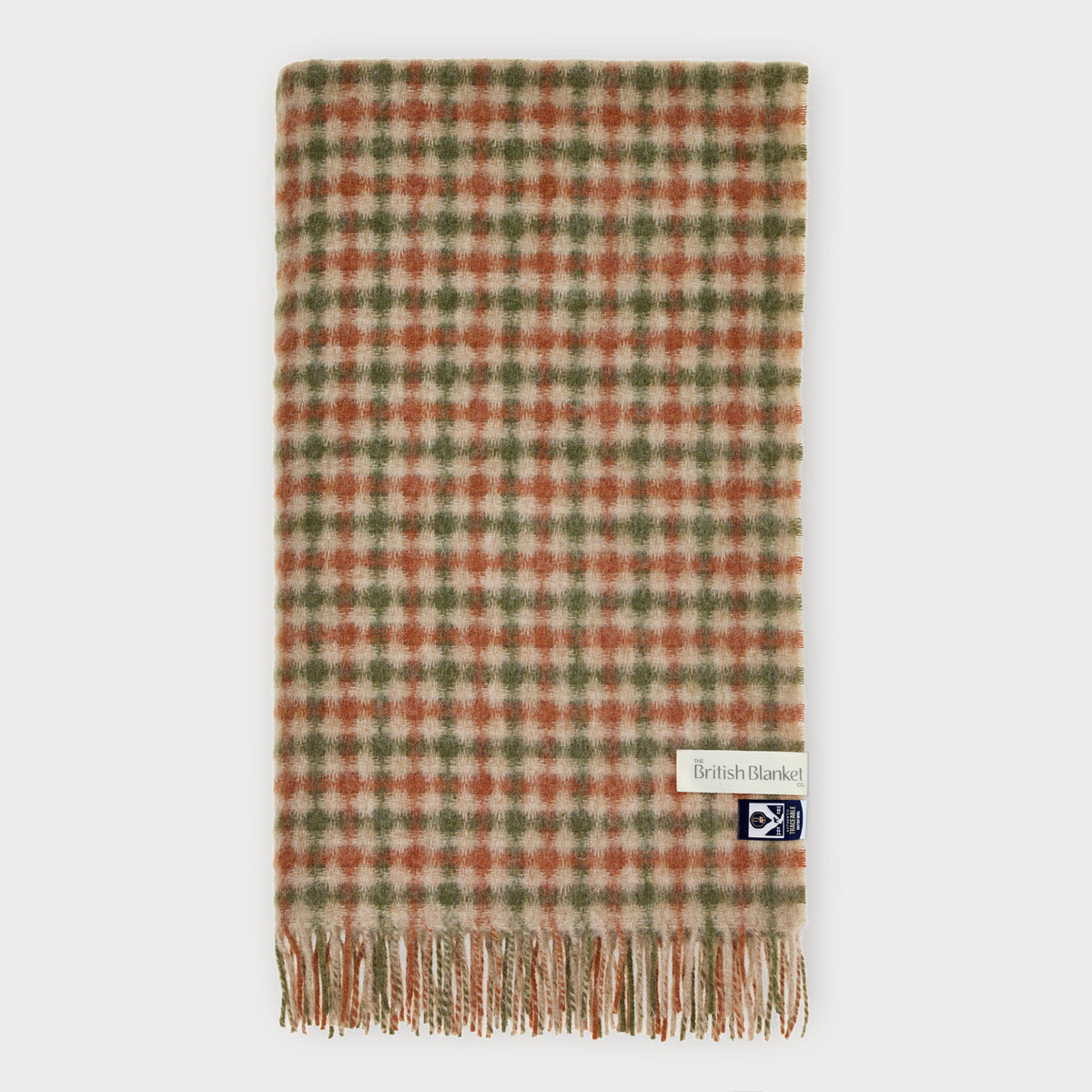
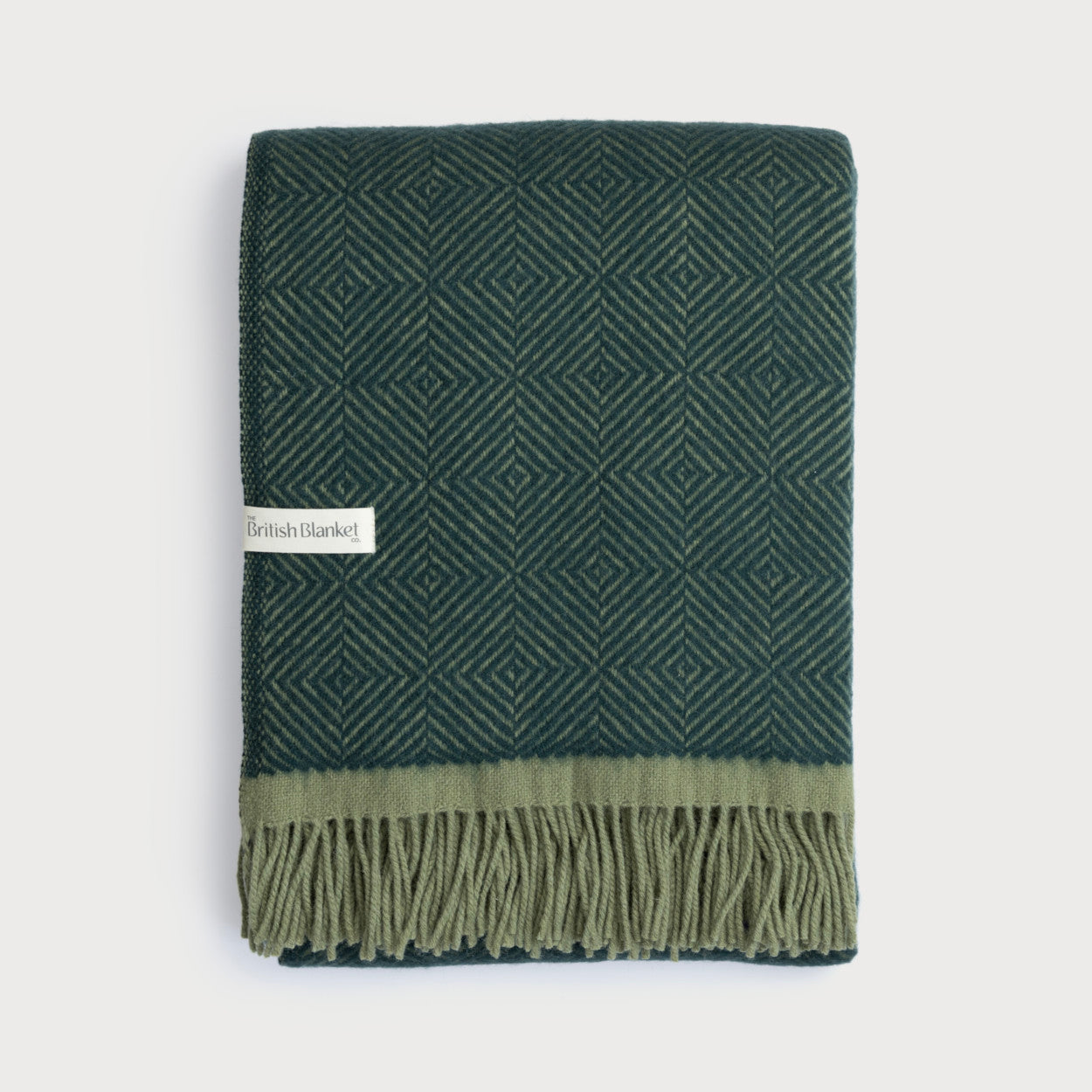
Angie Lewin's four blanket designs with The British Blanket Company: Forest Floor in Rust, Field's Edge in Green, Rockpool in Blue & Meadow Grass in Yellow
Bethan, one thing that fascinated me was how accurately the woven blankets mirror Angie’s prints. Was that always the intention?
Bethan: Absolutely, that’s the beauty of weaving a blanket with fine cotton yarn on a jacquard loom, all the fine detail can be captured. That meant scale, repeat, texture and colour were considered from the beginning.
Another beauty of jacquard weaving is that colour isn't flat. Angie selected several shades and we twisted them together, so each colourway actually includes four different yarns. From a distance they blend, but up close you notice tiny variations that give the colour more life.

Angie wrapped in her Forest Floor in Rust Blanket
Colour feels incredibly considered throughout the collection. How did those conversations develop?
Angie: I think every artist gradually develops a palette that's recognisably their own.
When Bethan sent through the yarn colours there were immediately some that I knew weren't right for these particular designs. They were beautiful colours, but they didn't belong to natural landscapes.
When I'm printmaking I nearly always move away from the literal colours I first observe. A print has to work as an artwork in its own right, so colours evolve throughout the process. The blankets felt very similar. We started from nature, but we weren't trying to imitate it exactly. Forest Floor suited rusty brown, Meadow Grass called for a harvest yellow, Rockpool is a fresh blue and Meadow Grass worked perfectly in green.

Angie's colour work is taken directly from the environment she surrounds herself with
Angie, your wood engravings begin on tiny blocks of wood that fit into the palm of your hand. How do you capture such intricacy?
Angie: That's one of the lovely things about wood engraving.
I work on the end grain of the wood rather than the plank side, which means I can engrave in any direction using very fine tools. The blocks are small because of the intricate detail that can be achieved by this process and they are also beautiful objects to handle.
The process is wonderfully gradual. I'll sketch first, transfer the drawing onto the block, engrave it, take a proof, then often go back and carve more away, before printing again. You're constantly refining. The print evolves through making rather than arriving fully formed. I enjoy that sense that nothing is ever quite fixed until the final moment.

Angie Lewin's Rockpool in Blue, available now
What was it like seeing those tiny engravings transformed into blankets nearly two metres wide?
Angie: That's one of the things I enjoyed most about the collaboration. It's exciting, but there’s always a little apprehension too as we are bringing together two quite different areas of expertise.
Seeing the blankets for the first time was wonderful because they'd retained the quality of the original engravings while becoming something entirely different. They're soft, textured, and tactile yet true to my original work on an entirely different scale.
British manufacturing has been important to both of you throughout this project. Why does that matter?
Angie: I grew up in a Cheshire cotton mill village, so textiles have always felt close to home. Although the mills had closed by the time I was growing up, there was still a sense of that heritage and the extraordinary skills that had existed there.
I think it's important that those skills continue. Producing something in Britain is a way to value the knowledge that has been passed down over generations.
Bethan: We often talk about the finished blanket, but there are so many hands involved before it reaches someone's home. Designers, weavers, finishers, everyone brings something to it. That's one of the reasons our annual artist collaborations are so loved. They celebrate creative practice at every stage rather than only the finished object.
 The Angie Lewin Collection is available now
Finally, what do you both hope people feel when they unwrap one of these blankets for the first time?
Angie: I hope they simply enjoy living with them. The nicest thing is when something becomes part of everyday life. You don't think of it as precious; you use it. It sits on the sofa, goes onto the bed, gets wrapped around your shoulders while you're reading. That's a lovely place for artwork to exist.
Bethan: Initially I think people will be drawn by the colours and the patterns, but then the more they look, the more detail they’ll see. Individual grasses, seaweed fronds and seed heads, as well as the blend of colours in the yarn itself.
Each blanket reveals more the longer you enjoy it. In a way, that's what this collaboration has been about all along: taking the time to look a little more closely.
Head to the Angie Lewin Collection to shop now!